


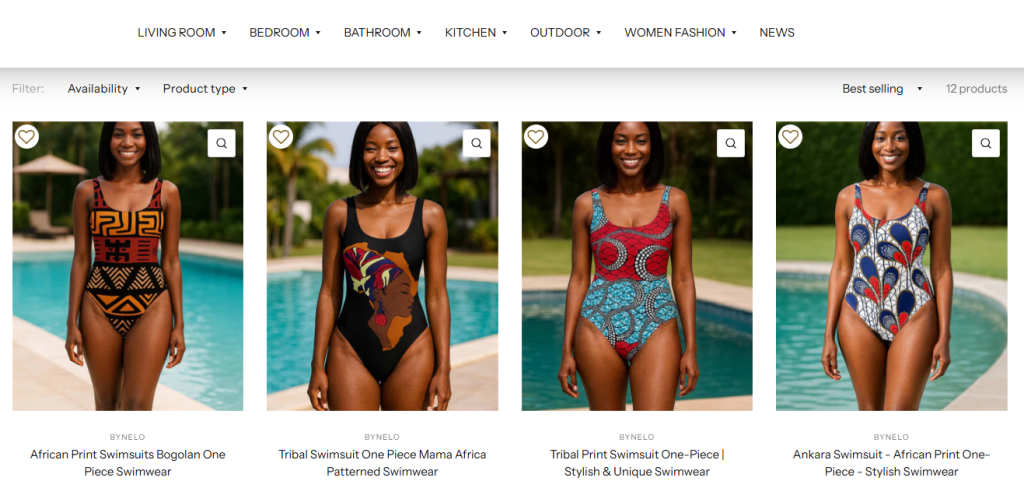
Swimwear shopping tends to default to the same handful of solid colors and small floral prints season after season, which makes it easy to forget how much personality a swimsuit can actually carry. African bathing suits take a different approach, built around bold wax-print patterns and rich color combinations that turn a swimsuit into a genuine style statement rather than just something functional to wear in the water.
The Print Tradition Behind the Look
The bold, graphic patterns associated with African print fashion, often referred to as ankara or wax prints, originated as vibrant, large-scale cotton textiles known for their saturated color and intricate repeating designs. Over the past couple of decades, these prints have moved well beyond traditional clothing and into mainstream fashion, showing up in everything from blazers to sneakers to, increasingly, swimwear. Applying these prints to a one-piece silhouette works particularly well because the larger, more continuous fabric area of a one-piece lets the pattern read clearly, rather than getting broken up the way it might on a smaller two-piece cut.
Why One-Piece Styles Work So Well With Bold Print
A one-piece swimsuit offers a different kind of coverage and structure than a bikini, and that structure pairs naturally with bold pattern. Because the print has more continuous fabric to work across, the design tends to look more intentional and less chaotic than it might on a smaller cut. One-piece styles also tend to be more universally flattering across body types, since they offer more structure and support through the torso, while still allowing for plenty of variation in neckline, back detail, and cut to suit personal preference. For anyone who wants the boldness of a statement print without it feeling overwhelming, a one-piece is often the more approachable starting point.
Styling for the Beach and Beyond
Part of the appeal of African print swimwear is how well it transitions beyond the pool or the beach. A vibrant one-piece paired with a simple sarong or wide-leg pants and sandals easily becomes a daytime outfit for lunch or a poolside bar, no need to change before heading out. Layering a lightweight kimono or cover-up over the suit lets the print peek through while adding a bit more coverage for travel days or sun protection. Because the patterns are already so visually rich, accessories tend to work best kept simple: a straw hat, minimal jewelry, and sunglasses let the suit itself remain the focal point.
Choosing the Right Print and Fit
Color and pattern scale make a noticeable difference in how a print swimsuit looks on different body types. Smaller, more densely repeated patterns tend to read as more subtle from a distance and work well for anyone who wants the print without too much visual emphasis in any one area. Larger, more graphic motifs make more of a statement and tend to draw the eye, which can be a great way to highlight a particular part of the silhouette depending on cut and style. As with any swimwear, fit matters more than print choice alone, paying attention to torso length, strap style, and how much support is offered through the bust line will usually matter more for comfort than the specific pattern selected.
Quality and Fabric Considerations
Good swimwear fabric needs to do several things at once: hold its shape, resist fading from sun and chlorine exposure, and dry reasonably quickly. Look for fabric blends that include a meaningful percentage of spandex or elastane alongside nylon or polyester, since this combination tends to hold shape and resist sagging better over repeated wear than swimwear with very little stretch content. For printed swimwear specifically, sublimation printing (where the dye is infused directly into the fabric fibers) tends to hold color better over time than printing applied only to the surface of the fabric, which can fade or crack with repeated sun and water exposure.
Caring for Printed Swimwear
Rinsing a swimsuit in cool water immediately after wearing it, whether in a pool or the ocean, helps remove chlorine or salt before it has a chance to break down the fabric or fade the print. Hand washing with a mild detergent designed for swimwear, rather than a standard laundry detergent, is gentler on both the elastane content and the printed pattern. Avoiding the dryer entirely and instead laying the suit flat to air dry will meaningfully extend its lifespan, since high heat is one of the fastest ways to break down the elasticity that keeps a swimsuit fitting well.
Bringing It All Together
A swimsuit doesn’t have to be an afterthought packed at the last minute before a trip. Choosing a bold, well-made African print one-piece turns something purely functional into a piece you actually look forward to wearing, whether that’s for a week at the beach or a single pool day at home. With the right print, fit, and a little basic care, it’s the kind of swimwear that earns a permanent spot in a warm-weather rotation rather than getting replaced every season.