
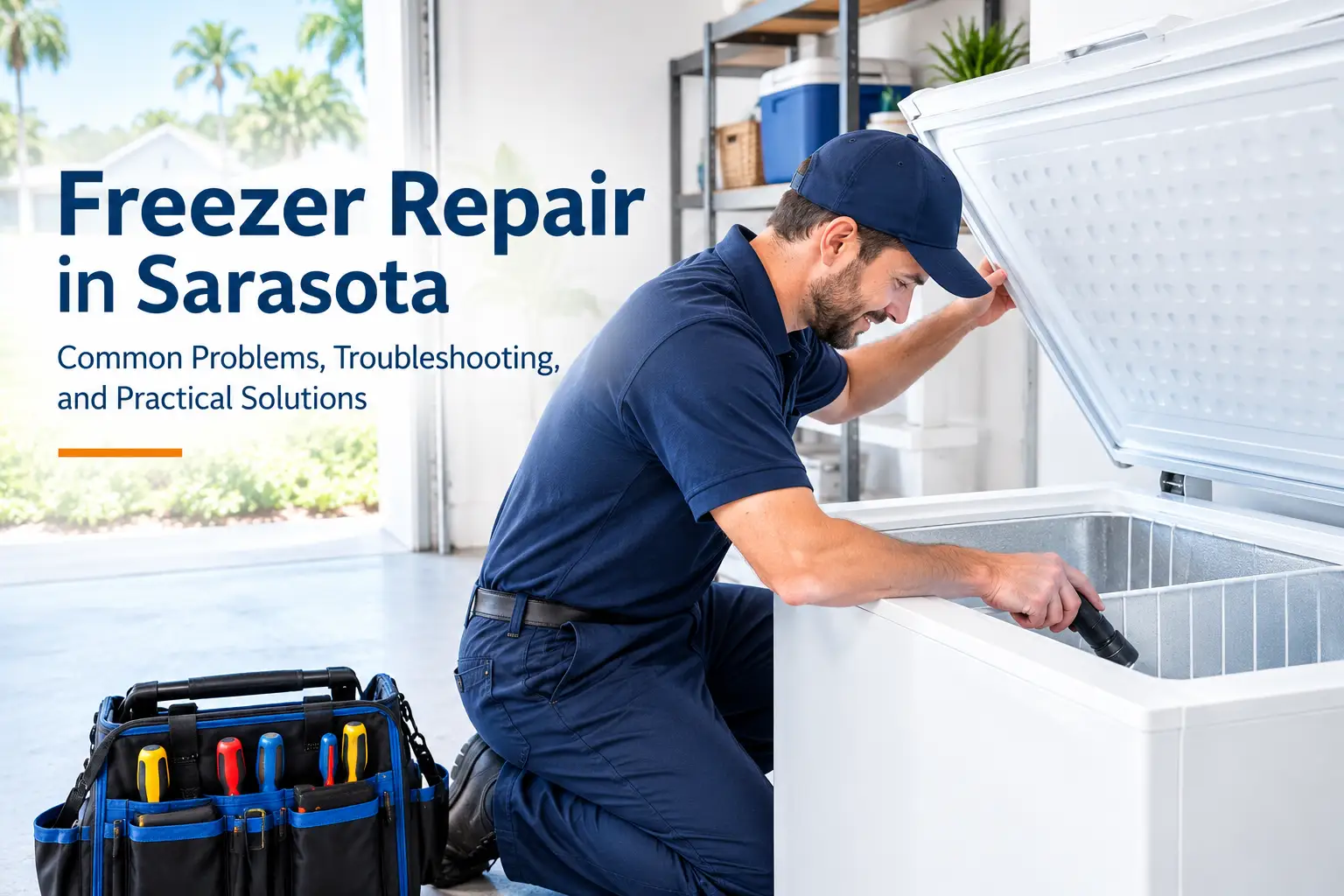

A freezer that stops freezing food, develops thick frost, leaks water, or runs continuously can quickly become a problem for any household. Frozen food may begin to thaw, ice production can slow down, and electricity consumption may increase when the appliance struggles to maintain its temperature.

For homeowners in Sarasota, Florida, warm weather, high humidity, and the heat inside garages can create additional challenges for freezers. A damaged door seal, restricted airflow, a failing fan motor, or a problem with the defrost system can all affect performance. Understanding the warning signs helps homeowners identify simple issues and recognize when professional service is necessary.
If your freezer is not maintaining the correct temperature or has developed a persistent fault, professional freezer repair in Sarasota can help identify the cause and determine which repair is appropriate. This guide explains common freezer problems, practical troubleshooting steps, maintenance recommendations, and the factors to consider when deciding between repair and replacement.
Why Is My Freezer Not Freezing Properly?
A freezer should maintain a temperature of 0 degrees Fahrenheit for long term food storage. If food begins softening, ice cream becomes unusually soft, or the appliance runs constantly without reaching the correct temperature, something may be affecting its cooling performance.
The cause may be relatively simple, such as a door that does not close properly, or it may involve an internal component that requires testing.
Check the Temperature Setting
Start by checking the thermostat or electronic temperature control. Settings can change accidentally during cleaning or when items are moved around the appliance.
Set the freezer according to the manufacturer’s recommendations and use an appliance thermometer to verify the actual temperature. Allow sufficient time for the temperature to stabilize, especially after adding groceries or leaving the door open for an extended period.
If the freezer remains too warm, continue checking for airflow restrictions and other visible problems.
Inspect the Door Seal
The door gasket prevents warm air from entering the freezer. When the seal becomes cracked, loose, dirty, or worn, cold air can escape and humid air can enter.
Inspect the gasket around the entire door or lid. Clean it with warm water and mild soap, then check whether the door closes evenly without obstruction.
A damaged gasket may need replacement. Ignoring a poor seal can contribute to frost accumulation, longer operating cycles, and inconsistent freezing temperatures.
Avoid Overloading the Freezer
Filling a freezer beyond its recommended capacity can obstruct air circulation, particularly in frost free upright models. Containers placed directly against internal vents may prevent cold air from reaching certain areas.
Rearrange items to keep ventilation openings clear. Allow newly purchased food to freeze without blocking the circulation passages.
If the freezer still struggles to maintain its temperature after these checks, a fan, thermostat, compressor, or another cooling system component may require professional diagnosis.
Why Is Frost Building Up Inside My Freezer?
Some frost can develop during normal use, especially when the door opens frequently. However, thick ice on interior walls, around drawers, or near air vents usually indicates excessive moisture entering the freezer or a problem with the automatic defrost system.
Warm Air Entering Through the Door
When warm, humid air enters the freezer, moisture condenses and freezes on cold surfaces. Repeated exposure can create a thick layer of frost that interferes with normal operation.
Check that food packages are not preventing the door from closing. Examine the gasket for gaps and avoid keeping the door open while organizing groceries.
If frost continues to return despite a good seal, another problem may be responsible.
A Faulty Automatic Defrost System
Many upright freezers and refrigerator freezer compartments use an automatic defrost system. This system periodically removes frost from the evaporator coils so that air can circulate properly.
A failed defrost heater, sensor, thermostat, or control board can allow ice to accumulate. As the ice grows, cooling performance may deteriorate even while the compressor continues running.
Repeatedly removing visible frost without addressing the underlying fault is unlikely to provide a lasting solution. A technician can inspect the defrost components and identify the cause.
How to Defrost a Freezer Safely
If your model requires manual defrosting, follow the manufacturer’s instructions. Remove the food, disconnect power when instructed, and allow the ice to melt naturally. Towels can help collect water during the process.
Never use a knife, screwdriver, or other sharp tool to chip away ice. Refrigerant lines may be located close to the inner walls, and puncturing one can cause a serious leak. Avoid using open flames or high heat to accelerate defrosting.
If thick frost returns quickly after proper defrosting, arrange an inspection rather than repeatedly treating the symptom.
Why Does My Freezer Leak Water?
Water beneath a freezer can result from a clogged drain, a damaged water line, excessive frost melting, or a problem with the appliance’s drainage system. Identifying where the water appears can help narrow down the cause.
A Blocked Defrost Drain
In appliances with automatic defrost, melted frost usually travels through a drain into a collection area. If the drain becomes blocked by debris or ice, water may accumulate inside the appliance or escape onto the floor.
Check for visible water around the bottom of the freezer compartment. If the drain opening is accessible, clean it only as directed in the manufacturer’s instructions.
Avoid inserting sharp objects into the drain or forcing water through internal tubing. If the blockage returns or the water continues leaking, the drainage system may need professional attention.
A Leaking Water Supply Line
Some freezers have built in ice makers connected to the household water supply. A loose connection, damaged tube, or defective inlet valve can allow water to leak behind or beneath the appliance.
Inspect accessible connections without pulling the freezer out abruptly. If you find an active leak, shut off the water supply when it is safe to do so.
Water near electrical components creates a safety risk. Avoid touching wet wiring or electrical connections, and arrange qualified assistance if the source cannot be identified safely.
Excessive Ice Melting
If the freezer loses power or stops cooling, existing frost and ice may melt and produce water. A door left open during warm weather can have a similar effect.
Check whether the appliance is receiving power and whether its temperature has risen. If food has begun thawing, prioritize food safety while investigating the cause of the failure.
Why Is My Freezer Making Loud or Unusual Noises?
Freezers normally produce a low hum as the compressor operates. You may also hear occasional clicks, water movement, or brief sounds associated with temperature changes.
New, persistent, or unusually loud noises deserve attention, particularly when the freezer is not cooling correctly.
Buzzing or Repeated Clicking
A buzzing sound may come from the compressor, a fan, or the ice maker. Repeated clicking combined with poor cooling can indicate a compressor starting problem, a faulty relay, or an electrical control issue.
Check that the appliance is level and not touching nearby cabinets or stored objects. If the noise continues or the freezer becomes warm, avoid repeatedly switching it on and off.
A technician can test the relevant electrical and mechanical components before recommending a repair.
Grinding or Scraping Sounds
Grinding may occur when a fan blade contacts accumulated ice or when a fan motor begins to fail. The evaporator fan circulates cold air inside many freezers, while the condenser fan helps remove heat in models equipped with one.
If the sound comes from inside the freezer, look for visible frost buildup without removing protective panels or reaching into moving components.
A persistent scraping noise may require inspection of the fan assembly or defrost system. Addressing the cause early can help prevent additional damage.
Why Does My Freezer Keep Running Without Stopping?
A freezer may operate for extended periods after groceries are added, following a defrost cycle, or during particularly hot weather. Continuous operation becomes more concerning when the appliance cannot maintain its target temperature.
Dirty Condenser Coils
Condenser coils release heat from the refrigeration system. When dust and pet hair accumulate on accessible coils, heat transfer can become less efficient.
Follow the manufacturer’s cleaning instructions and disconnect power when required. Some freezers have enclosed condenser systems that are not intended for homeowner cleaning.
If the coils are clean but the appliance continues running constantly, other causes may include a damaged door gasket, a faulty temperature sensor, restricted airflow, or a problem with the sealed cooling system.
A Faulty Thermostat or Temperature Sensor
The thermostat or electronic temperature sensor monitors conditions inside the freezer. If it provides inaccurate readings, the control system may not regulate cooling properly.
Possible symptoms include temperature fluctuations, excessive operating time, or a freezer that becomes too warm despite appearing to run normally.
These components require appropriate testing because similar symptoms can result from other faults. Replacing a thermostat without confirming the cause may not resolve the problem.
What Is the Difference Between Chest Freezer and Upright Freezer Problems?
Chest freezers and upright freezers perform the same basic function, but their designs affect how they operate and which components are most likely to need attention.
Common Chest Freezer Problems
Chest freezers generally have a top opening lid and many models require manual defrosting. Their design helps retain cold air when the lid opens, but a damaged lid gasket can still allow warm air to enter.
Common concerns include excessive frost, a lid that does not seal correctly, a malfunctioning thermostat, and cooling system failures.
Because chest freezers are often stored in garages, checking the manufacturer’s permitted operating temperature is particularly important.
Common Upright Freezer Problems
Upright freezers provide convenient shelves and drawers, and many models use automatic defrosting. Their doors are opened frequently, making gasket condition and proper closure important.
Problems may include ice around the evaporator, failed fan motors, blocked airflow, defrost component failures, and damaged drawer or door hardware.
Broken shelves or incorrectly positioned drawers can sometimes interfere with airflow or prevent the door from closing properly.
Which Type Is Better for a Sarasota Garage?
Neither design is automatically suitable for every garage. The freezer’s operating temperature range, ventilation requirements, and installation instructions matter more than its shape alone.
Garages in Sarasota can become considerably hotter than indoor living spaces. A freezer operating outside its rated ambient temperature range may struggle to maintain consistent cooling.
Before installing or replacing a garage freezer, confirm that the model is designed for the temperatures it will experience.
How Sarasota’s Climate Affects Freezer Performance
Florida’s warm weather and humidity can place additional demands on freezers, particularly those installed in garages, utility rooms, or properties that remain unoccupied for part of the year.
High Garage Temperatures
A freezer installed in a hot garage may need to remove more heat from its interior while also releasing heat into the surrounding space. If the ambient temperature exceeds the model’s operating limits, the appliance may struggle to maintain its target temperature.
Keep the freezer away from direct heat sources and provide the ventilation clearance specified by the manufacturer. If the appliance repeatedly runs without reaching the correct temperature, have its installation conditions and cooling system checked.
Humidity and Salt Air
Warm, humid air can increase frost formation when it enters through an open door or a damaged gasket. Homes near the coast may also experience salt air exposure, which can contribute to corrosion of susceptible metal components over time.
Regularly inspect the door seal, keep the appliance clean, and address unusual moisture or corrosion before it leads to more serious problems.
Seasonal Homes and Extended Absences
Seasonal residents should pay particular attention to freezers before leaving a property for several weeks or months.
If the freezer will remain in operation, confirm that it is cooling correctly, inspect accessible water connections, and consider how a power interruption would be detected while the property is vacant.
If you intend to switch it off, remove all food, disconnect power according to the manufacturer’s instructions, clean and dry the interior, and leave the lid or door open as directed to prevent mold and unpleasant odors.
How to Protect Frozen Food When a Freezer Stops Working
A freezer failure can put meat, seafood, vegetables, prepared meals, and other frozen products at risk. Food safety should be the priority while you arrange troubleshooting or repair.
Keep the Door Closed
A full freezer can generally maintain a safe temperature for approximately 48 hours during a power outage when the door remains closed. A half full freezer can generally maintain its temperature for approximately 24 hours.
These estimates assume the freezer was operating correctly before the outage. A mechanical failure may produce different results, so use a food thermometer when possible.
Check Food Temperatures Before Refreezing
Food that still contains ice crystals or remains at 40 degrees Fahrenheit or below can generally be refrozen, although its quality may decline.
Perishable food that has remained above 40 degrees Fahrenheit for more than two hours should generally be discarded. Do not taste food to determine whether it is safe.
If the freezer is no longer keeping food cold, transfer suitable items to a working freezer or an insulated cooler with sufficient ice.
Investigate Power and Electrical Problems Safely
Check whether other appliances in the home are receiving electricity and whether the freezer’s display or interior light operates.
If a breaker trips repeatedly, do not continue resetting it. A damaged power cord, electrical fault, or failing compressor may require professional diagnosis.
If you notice smoke, sparks, or a burning smell, stay clear of the appliance and seek qualified assistance.
Should You Repair or Replace Your Freezer?
Repairing an existing freezer can be worthwhile when the appliance is otherwise in good condition and the fault involves a replaceable component. Replacement may make more sense when the appliance has recurring failures or requires an expensive repair relative to its value.
When Repair Is Worth Considering
A repair may be appropriate when the problem involves a door gasket, fan motor, thermostat, defrost heater, or another identifiable component.
Consider the freezer’s age, previous repair history, availability of replacement parts, and estimated repair cost. A relatively minor fault does not necessarily justify replacing an otherwise reliable appliance.
When Replacement May Be More Practical
Replacement deserves consideration when the compressor or sealed cooling system has failed, particularly if the freezer is older and has experienced other problems.
Compare the complete repair estimate with the cost of a suitable replacement, including delivery and installation. The decision should reflect the appliance’s overall condition rather than age alone.
A professional diagnosis helps distinguish a straightforward component failure from a more extensive cooling system problem.
Frequently Asked Questions About Freezer Repair
What Temperature Should a Freezer Maintain?
The recommended temperature for long term frozen food storage is 0 degrees Fahrenheit. Use an appliance thermometer to confirm the temperature rather than relying entirely on the control setting.
Why Is My Freezer Cold but My Food Is Soft?
Soft food can indicate that the freezer is not maintaining a sufficiently low temperature. Possible causes include restricted airflow, a damaged door seal, a failed fan motor, or a cooling system fault. Check the temperature and inspect the door closure before arranging further diagnosis.
Can I Use a Hair Dryer to Defrost My Freezer?
Using a hair dryer near melting ice and water is not recommended because of the electrical hazard. Never use an open flame or high heat against freezer walls. Follow the manufacturer’s defrosting instructions and allow the ice to melt safely.
Why Does My Freezer Keep Tripping the Circuit Breaker?
Repeated breaker trips may indicate an electrical short, damaged wiring, or a compressor or other component drawing excessive current. Stop using the appliance until the cause has been assessed by a qualified professional.
How Often Should I Clean My Freezer Coils?
Follow the maintenance schedule in the manufacturer’s instructions. The appropriate interval depends on the model, installation location, dust levels, and whether pets are present. Garage freezers may require more frequent attention to accessible coils.
Can a Freezer Be Repaired on the Same Day?
Same day service may be available depending on technician availability, the nature of the fault, and whether the required part is available. Some repairs, particularly those involving the sealed cooling system, may require additional time for testing and temperature verification.
Get Reliable Freezer Repair in Sarasota
A freezer that cannot maintain its temperature, develops excessive frost, leaks water, or makes unusual noises may need more than a simple adjustment. Checking the temperature setting, door seal, ventilation, and accessible power supply can help identify basic problems, but persistent symptoms require a proper diagnosis.
For Sarasota homeowners, addressing freezer problems promptly is especially important when warm weather puts frozen food at risk. Regular maintenance, correct installation, and attention to early warning signs can help prevent avoidable breakdowns.
Elite Appliance Repair Sarasota serves homeowners in Sarasota and nearby communities, including Siesta Key, Longboat Key, Gulf Gate, and Palmer Ranch. The company provides appliance diagnosis and repair, with pricing explained before work begins.
To learn more about the company’s appliance repair services and arrange assistance, visit the Elite Appliance Repair Sarasota homepage.
If your freezer is struggling to maintain its temperature or showing signs of a mechanical problem, addressing the issue early can help protect your food and clarify whether repair or replacement is the most practical option.
Leave a Reply